
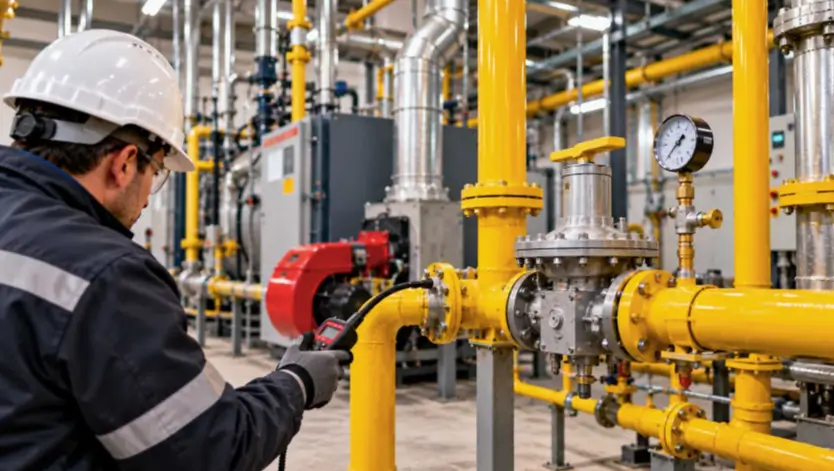

Key Takeaway: Homeowners may notice a gas line problem through a distinct odor, an unusual sound near a line, an appliance that behaves differently, or visible damage on exposed piping. A gas smell is not something to investigate at home. Leave the house and call the gas utility or 911. Any repair belongs to a licensed professional.
Gas lines are easy to ignore because they work quietly and stay out of sight. They run to the furnace, the water heater, the stove, and sometimes a dryer or a fireplace, and most days nobody gives them a thought. That’s normal. It also means a problem can go unnoticed until something changes. Homeowners looking into gas line repair in Knoxville usually want to know one thing first: what actually counts as a sign?
This article covers what a person might notice and what to do about it. It does not cover how a repair is done. That work belongs to licensed professionals, and gas is one area where guessing is never a good idea.
What Should You Do If You Smell Gas in Your Home?
Leave the house and call the gas utility or 911 from outside. Natural gas has a distinct odor added to it so people can notice a leak, and that smell is the one sign nobody should investigate on their own.
Don’t test for it, and don’t try to find the source. Skip the light switches, the phone inside the house, and anything else that could create a spark on the way out. Get everyone, pets included, out first. The questions about the line itself can wait until the utility says the home is safe.
What Else Might a Homeowner Notice?
Gas trouble doesn’t always announce itself with a smell, and some signs are easy to mistake for something else. These are things people sometimes report.
- A hissing or whistling sound near a gas line or appliance
- An appliance that acts differently than it used to
- Visible rust, wear, or damage on exposed gas piping
- A gas appliance that keeps shutting off or won’t stay lit
- Changes after renovation, digging, or other work near a line
None of these proves a gas line problem on its own. A hissing sound near a gas line still calls for caution, so treat it like a gas smell, leave the house, and call from outside. An appliance can act up for reasons that have nothing to do with the line feeding it. The point isn’t to diagnose. It’s to notice a change and decide who should look at it, and for gas, that answer is always a licensed professional.
Why Does Gas Line Work Need a Licensed Plumber?
Because the stakes are higher than they are for most household repairs. A dripping faucet that waits a week is an annoyance. A gas line that’s handled badly is a safety matter for everyone in the building.
There’s also the practical side. Gas piping is tied to local requirements, and the people who work on it are trained to follow them. A homeowner usually can’t see inside a line, can’t tell what condition it’s in, and has no way to confirm a repair was done properly. Those are reasons enough to leave it alone.
This is why guides that offer step-by-step gas repair advice should make you cautious. A good general source explains what to watch for and then points you toward a professional.
How Can a Homeowner Prepare for a Gas Line Visit?
By paying attention beforehand. Make a note of what you noticed, which appliance was involved, and when it happened. Mention any recent work done in or around the house. Keep a list of appliances that run on gas, because it saves time on the day.
That applies to buyers and renters too. Ask what’s known about the gas lines and which appliances use them, and ask for any records on file.
A visit is also a fair moment to ask questions. What was found, what the options are, and what happens next are all reasonable things to ask, and a professional should be happy to answer them in plain language.
See also: Cyber Protection Standards for Shropshire Businesses
Frequently Asked Questions
What does a gas leak smell like?
Natural gas has a distinct odor added to it so leaks are easier to notice. If you notice it, leave the home and call the gas utility or 911.
Can a homeowner check a gas line for leaks?
No. Leave that to the gas utility and licensed professionals, who have the training to do it safely.
Is a gas appliance acting up always a line problem?
No. The appliance itself may be the cause, and a licensed professional can sort out which.
Who should repair a gas line?
A licensed plumber or other qualified professional, never a homeowner working alone.
What should a homeowner do after smelling gas?
Stay outside until the gas utility or emergency responders say the home is safe to enter.
Final Word on Gas Line Safety
A gas line problem is not a project for a homeowner. If there’s a smell, leave and call the gas utility or 911. If it’s something subtler, such as a sound, a change, or visible wear, write it down and bring in a licensed professional rather than guessing.
6634 Central Ave Pike #108, Knoxville, TN 37912
Phone: 865-333- 4321
